
Martial Arts: Which Type Is Right for You? A Beginner’s Overview
Contents
What are martial arts, and how do they differ from self-defense?
Martial arts are practiced under fixed training and competition rules, while self-defense systems train how to behave in real dangerous situations. The lines between the two are blurry, because martial arts also train reaction, a sense of distance, and controlled defense.
What all disciplines have in common is the ability to defend against physical threats. Most people today train for very different reasons, though: for fitness and conditioning, for self-confidence and stress relief, or simply because the training is more varied than any treadmill.
A common classification also distinguishes between “hard” and “soft” styles. Hard styles such as taekwondo rely on direct, powerful techniques. Soft styles such as aikido absorb the energy of an attack and redirect it; your own attacks are not carried out with full force. For your choice, this means: There is no single best martial art, only the one that fits your goal and your body.
Which martial arts are there?
The most important disciplines at a glance, sorted by character:
| Martial art | Focus | Especially suited for |
|---|---|---|
| Boxing | Punching techniques with the fists, footwork | Beginners, conditioning, clear structure |
| Kickboxing | Punches plus kicks | Full-body fitness, versatility |
| Muay Thai | Punches, kicks, knees, elbows | Physically robust people, high intensity |
| Judo | Throws, hold-downs, breakfall training | Beginners of any age, club structure |
| Brazilian Jiu-Jitsu (BJJ) | Ground fighting, joint locks and chokes | Technique over strength, also smaller people |
| Karate | Strikes and kicks, forms (kata) | Beginners, discipline, belt system |
| Taekwondo | Kicking techniques, high kicks | Flexibility, coordination, balance |
| MMA | Combination of stand-up and ground fighting | Advanced students with prior experience |
| Krav Maga | Self-defense, real-life scenarios | Focus on safety rather than competition |
| Aikido / Tai Chi | Soft styles, redirecting energy, mindfulness | Easy on the joints, mental balance |
Availability is a practical factor here: You will find established sports such as judo and karate in almost every sports club, while specialized systems such as Krav Maga or BJJ are found mainly in larger cities such as Berlin and Hamburg.
If you want to combine punches, kicks, elbows, and knees, you’ll find the origins, rules, and how to get started in the Muay Thai guide.
Which martial art is right for you?
Choosing becomes easy when you start from your goal rather than from the sport. Four typical goals and the matching disciplines:
| Your goal | Matching martial arts |
|---|---|
| Fitness and conditioning | Boxing, kickboxing, and Muay Thai are intense interval workouts with a high calorie burn. What such a workout looks like in practice is shown in the guide to Boxing Training. |
| Self-defense | Krav Maga and Wing Chun train real-life situations on purpose; Wing Chun relies on efficiency and timing rather than physical strength and is also suitable for smaller or less strong people. |
| Technique over strength | Brazilian Jiu-Jitsu and judo work with leverage, throws, and weight shifts. BJJ is built explicitly on the idea that technique can offset a physical advantage. |
| Discipline, structure, and mental balance | Karate and taekwondo offer a clear belt system with visible milestones, while tai chi and aikido focus on calm, joint-friendly movement. |
And the most honest advice of all: A trial session beats any theory. Most people can tell in the very first session whether the training style, the group, and the atmosphere fit. Plan two to three trial sessions in different disciplines before you commit.
Find a martial arts coach in your city
In the nucoach app you compare verified martial arts and boxing coaches by discipline, focus, and price and book your trial session directly: martial arts in Berlin and martial arts in Hamburg.
What are the benefits of martial arts training?
Martial arts combine strength, endurance, coordination, and mental toughness in a single workout and are therefore among the most complete forms of training there are.
Physically, in almost every discipline you train your entire musculoskeletal system: footwork and standing stability, trunk rotation in punches and throws, shoulder and arm strength, and a level of conditioning that is built especially efficiently through the interval principle. How closely this is related to functional training is explained in the guide to Functional Training: Both work in movement patterns rather than isolated muscles.
Then comes the mental side, which many people name as their real reason for sticking with it: When you concentrate on technique, distance, and reaction, you have no room left for everyday thoughts. Self-confidence and body awareness also grow, because you experience in clear stages what you have learned, even documented visibly in the belt system.
How do you get started as a beginner the right way?
Getting started works in four steps: clarify your goal, pre-select a discipline, do a trial session, and build up gradually. In practice, three things matter most: a qualified trainer, a suitable training group, and a gentle build-up.
When choosing a school or coach, look at the trainer’s qualifications (licenses, competition or coaching experience, experience with beginners), at beginner courses or separate beginner groups, and at how contact is handled: Reputable schools introduce sparring only after months of technique training, with protective gear and always on a voluntary basis. If you are sent into a fight in your very first class, that is not a sign of toughness but of poor instruction.
How to vet coaches in general, with initial consultation questions and warning signs, is covered in the guide Find a Personal Trainer. For the physical foundation, parallel general conditioning is worthwhile; the basics are in the guide Strength Training for Beginners.
Who is martial arts suitable for, and who isn’t?
In principle, martial arts are suitable for all age groups, and many clubs offer age-appropriate groups from children to seniors. Children benefit from coordination and body awareness, while older practitioners maintain their flexibility and reaction speed.
There are clear limitations, though, and they deserve an honest mention: Certain techniques put heavy strain on the musculoskeletal system, which is why martial arts are only conditionally recommended for people with back or joint problems. In that case, get a doctor’s clearance first and choose the discipline accordingly (soft styles instead of full contact). During pregnancy, martial arts are not suitable because of the risk of falls and contact. And full-contact disciplines such as BJJ or MMA carry a higher risk of injury, such as overstretched ligaments and twisted joints.
The good news: Almost any discipline can be trained without contact. Fitness boxing, technique work, and pad work build movement, conditioning, and skill without any opponent, and for many people that is exactly the right and lasting path.
A trial session instead of a gut feeling
Verified coaches with their focus and transparent prices in every profile.
Find a coach nowFrequently asked questions about martial arts
Which martial art is best for beginners?
Boxing, judo, and karate are considered especially beginner-friendly: a clear training structure, wide availability, and a gradual build-up of intensity. Which one suits you depends on your goal and, in the end, on the trial session.
How old do you have to be to start martial arts?
Most schools and clubs offer classes from about age 6, and there is no upper limit. What matters is an age-appropriate group and a trainer who adapts exercises to individual needs.
Do I need a base level of fitness before I start?
No, conditioning builds up in training. All that matters is a gentle start instead of going all out in week one. Complementary strength and flexibility training speeds up progress and protects against overload.
Do I have to fight or spar?
No. Technique, bag, and pad work are non-contact, and at reputable schools sparring is always voluntary and is only introduced after months of technique training, with protective gear.
How much does martial arts training cost?
Club and school memberships often run about €30 to €80 per month, small-group classes €12 to €25 per session. Personal training with a martial arts coach falls within the usual range of €60 to €150 per hour, with the details in the guide to personal trainer costs.
What equipment do I need at the start?
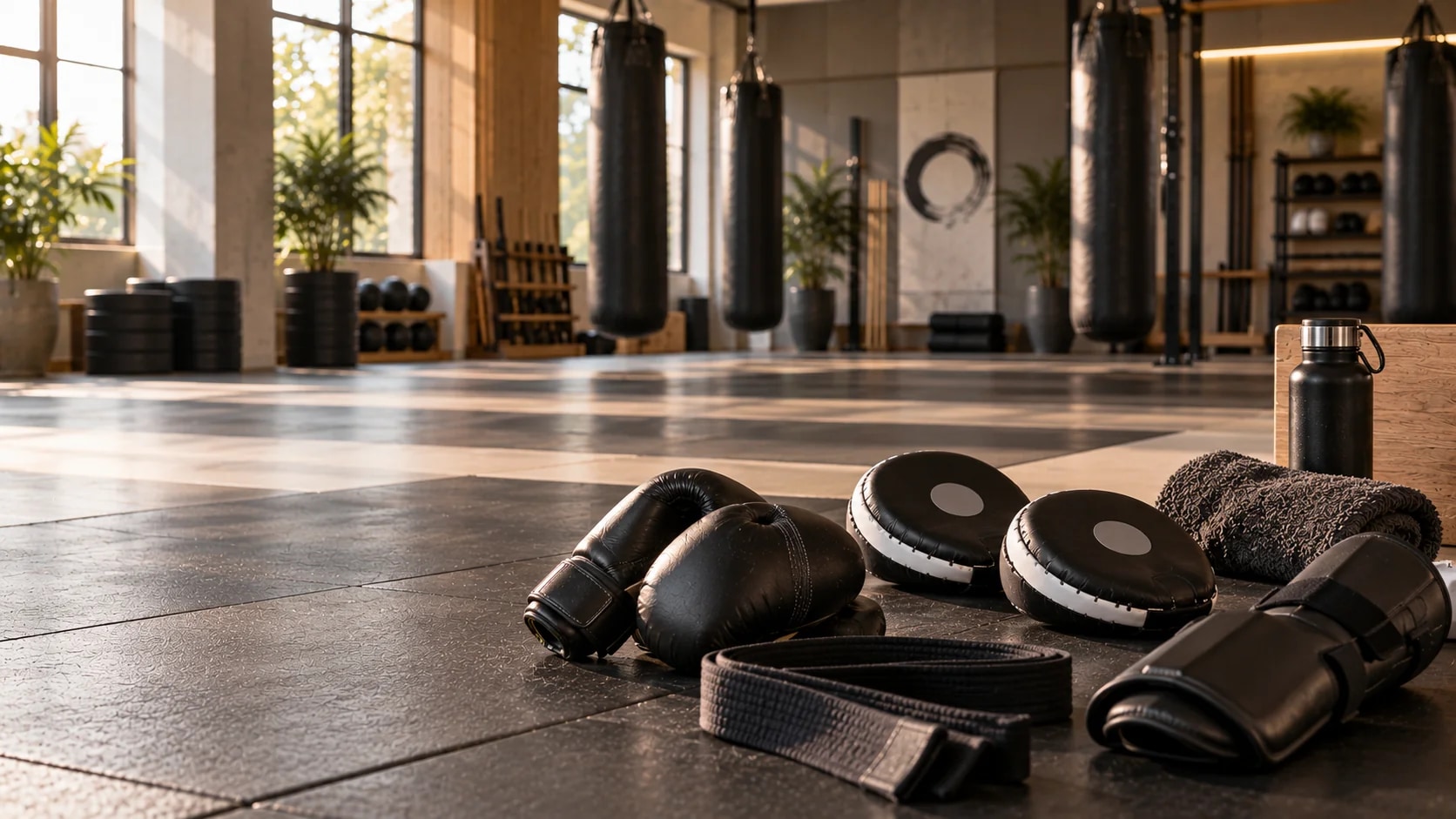
That depends on the discipline: hand wraps and gloves for striking sports, the respective uniform (gi) for judo, BJJ, and karate, and additionally shin guards for kickboxing. At many schools you can do your first sessions with loaner equipment, so wait to buy your own until afterward.
Find, book and pay your coach in one app
Verified martial arts coaches in Berlin and Hamburg, transparent prices, booking directly in the app.
View coachesThis guide does not replace individual advice: If you have back or joint problems, are pregnant, or are recovering from injuries, the choice of discipline should be cleared with a doctor. You can find, compare, and book verified martial arts coaches in the nucoach app, for Berlin and Hamburg.